
POTENTIAL MEDICAL COMPLICATIONS
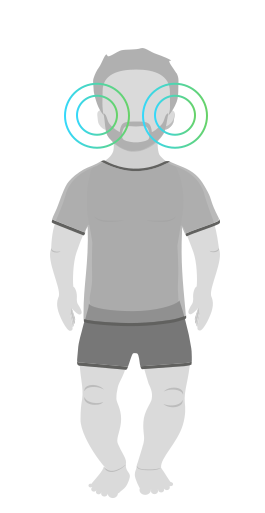
Hearing loss and fluid buildup in
the ears
(18+ YEARS)
What is it?
Otitis media with effusion is a buildup of fluid behind the eardrum without signs of infection. Adults with achondroplasia are more likely to develop this condition due to their skull shape, which makes it more difficult for the ear to drain fluids.
Fluid buildup can lead to hearing problems and an increased risk of early-onset hearing loss. In one study of adults with achondroplasia, more than half of participants had mild hearing loss in at least one ear.
Possible symptoms
- Difficulty hearing
- Mild discomfort
- Feeling of fullness in the ear
These are not all the symptoms of otitis media with effusion. Some of these symptoms may indicate another condition. Only a doctor can diagnose this condition. If you have any questions about what you are experiencing, please talk to your health care provider.
How is it found?
Diagnosis is made by a primary care provider or an ear, nose, and throat (ENT) specialist using a tool called an otoscope to look inside your ear. A test called tympanometry may be used to check how well the eardrum moves and to help detect fluid buildup.
Medical guidelines recommend:
- Having your hearing checked once a year
- Seeing an ENT specialist if you are diagnosed with hearing loss
How is it managed?
Treatment is typically provided by an otolaryngologist/ENT specialist and may include:
- Hearing aids or assistive listening devices
- Workplace and educational accommodations
Obstructive sleep apnea
(18+ YEARS)
What is it?
Obstructive sleep apnea (OSA) is when breathing stops and starts during sleep because the airway gets blocked. In adults with achondroplasia, OSA is often caused by differences in bone growth and facial structure that can result in a smaller airway. OSA affects 60–70% of adults with achondroplasia and is more likely to occur in individuals who are overweight.
Possible symptoms
- Snoring
- Daytime sleepiness
- Observable pauses in breathing
- Choking or gasping during sleep
- Restless sleep
- High blood pressure
These are not all the symptoms of OSA. Some of these symptoms may indicate another condition. Only a doctor can diagnose OSA. If you have any questions about what you are experiencing, please talk to your health care provider.
How is it found?
Diagnosis is made by a sleep medicine specialist, pulmonologist, or ear, nose, and throat (ENT) specialist, and involves an overnight sleep study (polysomnography).
How is it managed?
Treatment may include:
- Continuous positive airway pressure (CPAP), bilevel positive airway pressure (BiPAP), and/or oxygen therapy
- Surgery to remove the adenoids and/or tonsils*
- Weight management
Regular follow-up is important because OSA can change over time. Treatment can improve sleep and reduce health risks, including effects on heart health.
*Additional procedures, like facial or jaw surgeries, may be considered in rare cases. It is important to consult with a skeletal dysplasia expert before pursuing these options.
Spinal stenosis: Narrowing of the spinal canal
(18+ YEARS)
What is it?
Narrowing of the spinal canal (also called spinal stenosis) occurs when differences in bone growth reduce the space around the spinal cord and nerves, putting pressure on them. Spinal stenosis affects about 60% of people with achondroplasia by age 40, but symptoms can present earlier than this.
Possible symptoms
Symptoms may develop gradually and worsen over time.
Possible symptoms include:
- Lower back pain
- Pain, heaviness, cramping, numbness, tingling, or weakness in the legs, groin, or buttocks
- Muscle spasms or “jumpy” legs
- Stiffness or difficulty moving the lower back or legs
- Balance problems or reduced ability to walk longer distances
- Loss of bladder or bowel control
In severe cases, spinal stenosis can lead to nerve damage or paralysis. Early evaluation by an experienced health care provider is important. Staying up to date with routine care can help identify symptoms early and support timely care.
These are not all the symptoms of spinal stenosis. Some of these symptoms may indicate another condition. Only a doctor can diagnose spinal stenosis. If you have any questions about what you are experiencing, please talk to your health care provider.
How is it found?
Diagnosis is made by a spine specialist and is based on symptoms, a physical and neurological exam, and scans like magnetic resonance imaging (MRI). Evaluation may include checking strength, sensation, and reflexes.
How is it managed?
Treatment may include:
- Physical therapy and core strengthening
- Weight management
- Pain management strategies
- Surgery to relieve pressure on the spinal cord (decompression) may be used for individuals with moderate to severe symptoms. Goals of surgery may include creating more space around the spinal cord (laminectomy) or stabilizing the spine by joining bones in the spine together (spinal fusion)
Medical guidelines recommend that narrowing of the spinal canal be evaluated and managed by a spine specialist with experience in achondroplasia.
Bowed legs
(18+ YEARS)
What is it?
Bowing at the knees or lower legs (also called genu varum) can happen when one side of the leg grows longer than the other, causing the legs to curve outward. Genu varum occurs in up to 70% of people with achondroplasia.
Possible symptoms
- Bowing (curving outward) at the knees or lower legs when standing or walking
- Differences in walking (including instability), which may cause the outer edges of your shoes to wear down more quickly than the rest of the sole
- Knee or lower leg pain
These are not all the symptoms of genu varum. Some of these symptoms may indicate another condition. Only a doctor can diagnose genu varum. If you have any questions about what you are experiencing, please talk to your health care provider.
How is it found?
Diagnosis is made by an orthopedic specialist/surgeon using clinical measurements, imaging like an X-ray or MRI scan, and through evaluation of your walking.
How is it managed?
Most adults with bowed legs do not need treatment. Surgery is more commonly done in childhood but may be considered in some adults if symptoms like pain or difficulty walking occur.
Medical guidelines recommend that surgeries for bowed legs or other leg alignment concerns be performed at centers with expertise in achondroplasia.